 The other day I started thinking about what would have happened if I had stopped looking critically at Christianity after reading those articles that first made me question the Bible’s legitimacy. What if I had turned from them and decided to never look at anything else that might cause me to doubt my faith? If I had, I’m sure I’d still be a Christian today.
But would that really be good enough? Obviously, the things my faith were built upon weren’t solid enough to withstand scrutiny. So if I had maintained faith only by refusing to investigate my reasons, would that kind of faith be pleasing to God? I think that’s a question believers should consider. If that level of faith is good enough, we’re essentially saying, “oh, if only you hadn’t taken your faith so seriously!” But that seems crazy.
The alternative is that my faith might have been good enough until the day I ran across things that made me doubt. At that point, the only way to remain pleasing to God would be to investigate the claims and come out the other side with a stronger faith. Of course, that’s not how it worked out for me. If God’s real and Christianity’s true, then I think this view makes the most sense. However, it causes problems for those Christians who have refused to look at any evidence that might call their beliefs into question. I’ve had several tell me that they won’t read anything an atheist has written, or don’t want me to point out the passages that I found problematic because they don’t want to lose their faith. How does that make sense? If their faith is worth keeping — if it’s true — then further investigation should only support their beliefs, not call them into question.
I’m not trying to pick on Christians here, we can all be guilty of this from time to time. It’s essentially an extreme case of confirmation bias — one in which we realize we’re being biased and we even think of it as a good thing. In fact, it’s extremely dangerous, and if we feel ourselves thinking along those lines, it should be a red flag. What’s wrong with our current position if we have to hide from information in order to keep it?
And in the end, I’m glad I didn’t stop looking. The journey out wasn’t easy, but I feel like things make so much more sense with my current worldview. Even if I’m still wrong, I’m closer to the truth than I was before, because I’ve learned new information and corrected some past misunderstandings. That can only be a good thing.

 Finding Truth
I do not have the blind faith of a child to just accept everything about the Bible, in fact I don’t think it’s inerrant and I don’t think that in context it can be made to apply as rules for modern life – not unless we’ve all been Ancient Romans all along and nobody told us. I think that generally loving one’s neighbor, serving one’s community, and helping take care of people is a great idea even if it’s not in the name of religion but doing the right thing. I think like Israel, we’re all up to wrestle with God in our own way and that no two of us will have the same results. Ultimately, I think it’s bad Christians that have done so much more to discredit God than He himself ever could – it’s in his name that people have done many terrible things. That’s a great point about Rabbi’s, when you walk by them studying you hear raucous debate, they question every detail of their belief to further define it. Christians that are afraid to question will never have to seek after answers.
LikeLike
That’s a great quote, Arch! Thanks, Howie and William. I be feeliin’ the love up here in the Northwest (where we finally have snow)! And, Jamie, those are all really good points, especially “generally loving one’s neighbor, serving one’s community, and helping take care of people is a great idea even if it’s not in the name of religion but doing the right thing”
LikeLike
I don’t know how far north you are, Kent, but we have commenters in Nova Scotia, and they still haven’t had snow there yet. This has been a strangely warm Winter here in the northern hemisphere. I enjoy being out in shirtsleeves, but I keep seeing, in my mind’s eye, Polar icecaps melting.
LikeLike
Snowing here (early a.m.) in southwestern Ontario right now Arch but won’t it won’t stay.
Has been really mild. Fog and mist for several days. Bit of a wind coming around from the west with a hint of north, thus the rain turned to a wet snow.
LikeLike
What if?
The first thing that comes to my mind (about you Nate) is the loss of your family through shunning as a result of your change of mind. What if you had stayed? You’d still be a part of the family that has now shunned you.
Nate wrote: “I’ve had several tell me that they won’t read anything an atheist has written, or don’t want me to point out the passages that I found problematic because they don’t want to lose their faith. How does that make sense? If their faith is worth keeping — if it’s true — then further investigation should only support their beliefs, not call them into question.”
I keep mulling over this “Faith” issue and wonder if it’s a matter of wanting to “keep the faith” and less about “Belief.” I’ve heard it said and have had it said to me that I should just have faith. Not so much belief, but faith. Faith that someone somewhere (God) knows the truth and we can’t all know the truth so trust that someone (God) does and that’s all I (we) need. Faith. Not so much Belief with a capital “B”. There is something child-like in a simple faith. And of course, the Bible supports this concept. Some prefer a child-like faith of simple trust without all the “i’s” dotted and the “t’s” crossed.
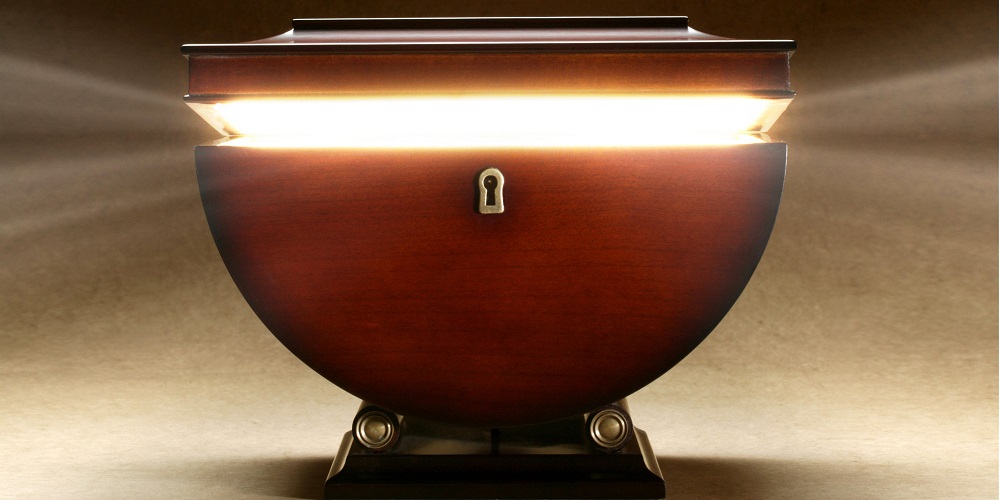
Then there are those little rebellious kids, like us, who never intended to open up the box and now we are free but lost to a world that use to love us.
LikeLike
This post really resonated with me! Thank you for writing it. It’s been less than a year for me since my deconversion, and choosing to investigate the different arguments against theism and Christianity was a difficult journey for quite a while. I was a fundagelical for about 34 years and it was uncomfortable to consider all of the arguments against my faith. The cognitive dissonance was intense! But I have thought often now… What if I hadn’t pursued those criticisms? What if my oldest son hadn’t told me he was an atheist, which started my journey? But I’m so very glad I did!!
LikeLike
Speaking of Canada, and totally off-topic, I was watching a funny movie the other day, in which a CIA-type maintained that Canada is secretly training an army of Sasquatch to take over the world. So I suppose your secret is out! We’re watching you —
LikeLike
“There is something child-like in a simple faith.” – “Except ye be as a child, ye shall not enter the kingdom of heaven.“
LikeLike
I believe it to be so that many have their religious faith sustained by the emotional solace that is derived from it. In other words, they are taking a purely pragmatic view in which the felt reality of that solace overrides reason, or what could be reason were it to be permitted. William James covers this derived aspect of faith well in his magisterial work “The Varieties of Religious Experience”. For the pragmatist, the actuality of experience is paramount of course; it subsumes any objective conclusion and relegates it as being of lesser import to what is actualised and felt.
I think if we are of a character type disposed to faith per se, then it is not so easy as to switch it off by virtue of reason. More typically, the faith becomes transferred into some other externality, one which has as of yet been subjected to any rigorous scrutiny – we do not yet know whether that too will survive such scrutiny; and faith has seduced us unwittingly into the transference. An indicator of this kind of behaviour can be seen when a devout believer suddenly adopts an apparently polarised perspective – the religious fundamental becomes not just atheistic, but fervently anti-theistic.
Faith is indeed a seducer; it can be pernicious, yet it can also be very beautiful. It may be the intelligent sibling to belief; it is open to possibility, not closed in a dogmatic stasis like its brother; it is prepared to accept the truth in whatever form it may eventually arrive. In any case, if we are predisposed to this psychological trait, then it is likely to remain with us for life. The task then, is to deploy it carefully, with reason sealed securely away from the tendrils of unthinking belief. A good companion for faith is the vigilant and enquiring mind; in tandem, the two can become an effective vehicle for the discovery of ontological knowledge.
Many thanks for this eloquent and erudite article Nate.
Hariod Brawn.
LikeLiked by 1 person
Absolutely. If we are not squirming in our pants over our closely held beliefs and prejudices every single day (okay, maybe not *every* day), then we are not being truthful with ourselves and those around us.
It’s kind of funny how Christians think that becoming an atheist or agnostic is some how giving up on their struggle with faith. What I think they do not realize is that everyone, regardless of faith or no faith, struggles with life’s moral dilemmas. We don’t need a god for that.
Not sure that made sense…I should probably write a blog post…
LikeLike
Thanks to everyone else who’s commented.
Dave, I agree that some of these differences must just come down to wiring. Nicely said.
Ruth, I particularly agreed with your comment. I felt the same way — I had no idea I was opening Pandora’s Box till it had already happened.
Zoe, I hadn’t really thought about the delineation that you lay out about faith and belief. You may be right that some people view it that way. It’s unfortunate that something as simple as what we think about a topic can be strong enough to sever ties with family and friends… I guess it’s just a sad truth about life. In fact, over the past year or so I’ve come to think that even if my family hadn’t held to the withdrawal/shunning thing, we’d still likely be in about the same place. Religion was such an important part of our lives — and still is for them — that it would have been hard to continue on anyway, I guess. The tension would have been so high, I doubt much would be different.
Hi Logan! Thanks for the comment, and welcome to my blog! I appreciate your sharing a bit of your story with us. Congratulations on working your way through those difficult times — most of us here know what it’s like to struggle with those questions. Feel free to comment anytime!
Hi Hariod, thanks for the great comment. It made me think about the differences among people. I used to believe that there was only one right way to think and live. That God wanted a particular thing and everyone was accountable to it (though I allowed for some slight variation due to circumstance, environment, education level, etc). But now I see how I wrong I was to think that, and that’s freed me up in so many ways. My biggest epiphany was that no one had to figure things out. How could we be expected to? Our experience is limited — there’s no way we could know for sure all the answers to these big questions of purpose, existence, nature, etc. In other words, it’s okay for us to have different opinions about things, and it’s okay to be wrong. That was a huge revelation for me, and a huge relief. Thanks again for your comment. 🙂
Hi NE! I think I got what you were saying, and I guess it sort of relates to what I just said to Hariod. You’re right that agnosticism and atheism aren’t giving up or turning away; they’re simply conclusions that someone can come to when thinking about these big issues. And calling them “conclusions” might be misleading, since it denotes finality — maybe I should just call them “positions”. Hopefully as long as we are drawing breath, we are open to changing our positions on these things, depending on whatever evidence and insights we come across.
LikeLike
Nate, great post and I agree wholeheartedly with maybe a tiny exception. One day I was sitting there angry that someone I knew, a homeschooling mother, only taught her children creation “science”. My wife told me something I’ll never forget. She said, you know Brandon, maybe you could go easy on her because deep down she’s afraid. I thought, hmmmmm, that actually explains her really well. (It was one of those, wow, my wife is really insightful moments). And, there are other reasons. There are people unwilling to look at opposing cases because they are struck with an arrogant certainty, those unwilling to look at opposing cases because they are frankly scared, others who just don’t have the time or emotional stamina or patience or whatever it takes, maybe even just the baseline curiosity or drive to seek truth. I mean the first time we are slammed in the face with cognitive dissonance. . . who wants to live like that?! It’s uncomfortable.
At the end of the day, I think it is our duty, to whatever extent we are curious and value truth, to spend time on these problems. But, I also empathize with those who are not given curiosity like us and who may be a little scared about the whole thing. I’m not saying they shouldn’t get courageous and face the problem, rather at least I understand they are human.
LikeLike
Thanks Brandon, you make a good point. I remember years ago, before I started having any major doubts about Christianity, my brother-in-law seemed to be going through a period where he was struggling with some things. In particular, he was trying to get his head around how we could say we were monotheists when we believed in the Trinity. At the time, I thought “it’s just semantics — who cares?” I later came to see the problem he was considering a little better. But at the time, I definitely disregarded it and had no interest in digging into it.
So as much as I think people should tackle difficult questions, I’ve also had times in my life where I didn’t.
It’s hard for me to understand some of those motivations, but I can at least accept that they’re real motivations for some people. And by the same token, I’m sure many of them would have trouble understanding the reasons that drove me to this point. It’s frustrating that we have these communication breakdowns, but I guess that’s just part of the human experience sometimes.
LikeLike
I’m in North Idaho (yes, North is capitalized here. It’s a local thing). Snow turned to rain today making a big ol’ morning full of yuck. Oh well, it’ll probably be sunshining by this afternoon, ha ha! At least we get all four seasons around here…sometimes in the same day!
LikeLike
@ Arch,
Ha Ha re: movie. Who knew?
And now we helped Obama and Castro make up. Canadians eh?
LikeLike
Was it Asimov who said something about the surest way to become an atheist was to read the bible? ( Arch will know the exact quote; save me Googling)
Yes, it takes a brave ( but truly honest Christian) to ask such questions and then go and investigate, and I have yet to encounter a deconvertee who isn’t relieved ( and happy) almost beyond measure for taking that bold step.
People like Unklee and Brandon try to intellectualize their belief, drawing upon demonstrably erroneous information/scripture which is then subject to such convolution to fit with their already inculcated views as to be risible.
Certainly, such folk exhibit a dismissive attitude toward every other religion, and on similar grounds, to boot, and even various cults within their own faith.
Look at Brandon;s comment regarding his ”anger” toward the Creationist home-schooler mum.
In reality, there is no intellectual reason to believe, only some form of pseudo-intellectualism masking an emotional dysfunction.
LikeLike
Mmm, I don’t think it’s quite that simple. I feel like I know Brandon and unkleE well enough by now to trust that they’re not being disingenuous. We may not agree on the particulars of these issues, but I trust their sincerity. It’s one of the things I appreciate about them.
The other thing is that while they would certainly love for me to agree with them, and I wish they would see things my way, I think all of us are okay with the idea that we see things differently. That’s really all I ask for.
LikeLike
You should visit violetwisps blog and look at how Brandon conducts himself, then maybe you might change your mind on that score, Nate.
http://violetwisp.wordpress.com/2014/10/31/no-such-thing-as-deconversion/#comment-15060
The problem with ”seeing things differently” is that the christian is duty bound/ faith bound to proselytize, as you surely know!
And in your country, for example, they believe they are one of the most persecuted groups in the US!
LikeLike
I’m going to throw in along with Nate for Brandon and Eric (unkleE) – Nate said exactly what I think. And I have seen some of Brandon’s stuff on other blogs and some of it irks me, but I’m sure there’s stuff that I write that irks them as well. As a plonker myself, I can empathize with other plonkers. 🙂
LikeLike
I tend to agree with Ark, in that while many christians are indeed sincere, still retain their faith in the bible by ignoring, twisting or interpreting facts, scripture and reason. This will come off far harsher than i intend it, and i also realize that I am not likely as free of these i’d like to imagine.
But like nate, i’m not bothered by that when they are respectful of other’s conclusions.
People are not perfect, so i shouldn’t expect them to be. Each of us is capable of error and have made our own share and are likely guilty of errors at this very moment without realizing it.
But faith is something that is had without fact and without reason. I do not mean to suggest that the faithful have no facts or no reason, as the bible (for example) has names of real individuals and real places, etc. It has many precepts that seem based in reason. These facts are used to bolster the claims and dogmas that are not rooted in fact, and they use these reasonable precepts to laud the whole or overlook the unreasonable.
I think faith is a trust based in hope above all else, or perhaps fear, and the degree to which each serves likely differs among believers.
But certain ideas like sin exists because of freewill, and freewill exists because god wants sincere worship and not the mindless service of robots, seem to fall short when you begin to consider heaven. Heaven being a place on no sin. If there is no sin in heaven, does that mean that there is no freewill? if there is freewill and no sin, then we again go back to the question of why there is sin. And if there is no freewill in heaven, then god is fine with robot service afterall. None of it makes sense when really thought out. heaven seems like a concept that must be considered in “low light” and in the periphery in order to find believable.
There are several others like the virgin birth, or like the bible being rooted in the claims of men who lived in superstitious times, and many others. They all seem to permeate in a logic that is not all searching or that stops in tracks and simply trusts, that simply surrenders to faith.
maybe that’s not bad, but I still haven’t figured out how the surrender to trusting faith in Christianity trumps the surrendered trusting faith of anything else – other than Jesus that is (it’s just that Jesus is no more an answer than Muhammad or Kermit the Frog).
LikeLike
William, I read your comment and couldn’t really find something in there I would disagree with.
However, I think I just look at this from a different angle. What I would say is that faith means different things for different people. In talking with Eric for instance I’ve gotten the feeling that he intellectually comes to his conclusions using facts, evidence and reason and this gives him about a 95% (a number he wrote on my blog a while ago) personal confidence level of his conclusions (note the key word “personal”). Then the faith for him is the fact that even though he isn’t 100% confident he lives his life practically as if it is true. I may be improperly characterizing his stance, but this has been my impression.
In my thinking I’ve wondered if that is really how many skeptics live as well. We try to come to our conclusions based on facts, evidence and reason but we are aware that complete certainty is unattainable. But practically speaking we live as if our conclusions are correct. If this is what faith is to them (Eric and Brandon correct me if I’m wrong) then I don’t see that as anything negative.
LikeLike
I suppose you’re right, howie.
I come from a very fundamental background, something unklee and I have discussed some, and i can admit that likely makes it more difficult for me to identify with their perspectives.
And I dont mean to suggest that I always operate under complete and perfect logic, but I just cant seem to grasp “perfect god lends hand in composition of very imperfect biography and guide book.” To me, it doesnt compute. Perhaps it’s me who hasnt thought it all the way through and not them.
I do think brandon and portal and unklee are smart and terrific guys, I just think they make bigger leaps than i do. I’m not necessarily even stating that in a critical way, but i think ‘faith’ seems to suggest that as well.
i will ponder it.
LikeLike
“And now we helped Obama and Castro make up. Canadians eh?”
You think I don’t see through your plan? You’re not fooling ME! You lull us into a false sense of security by being terminally “nice,” then it’s, “RELEASE THE SASQUATCH!“
LikeLike
One of these days, Ark, you’ll have to tell us how you REALLY feel —
LikeLike
Que the quotations:
LikeLike